Scientific nameAmazona versicolor
Meet Our Wildlife Superstars
St. Lucia Parrot
Amazona versicolor
Kwéyòl/local name: Jaquot
St. Lucia's national bird and one of the Caribbean's great conservation recovery stories. This intelligent, colourful parrot survives naturally nowhere else on Earth.
EndemicFound only in St. Lucia
VulnerableGlobal conservation status
National BirdA symbol of St. Lucia
RainforestCanopy and forest habitat
Quick facts
At a Glance
FamilyPsittacidae
HabitatMontane rainforest and other forested areas
DietFruit, seeds, nuts, flowers and other plant material
Field clueOften heard before it is seen
Global rangeEntirely restricted to St. Lucia
Meet the bird
About the St. Lucia Parrot
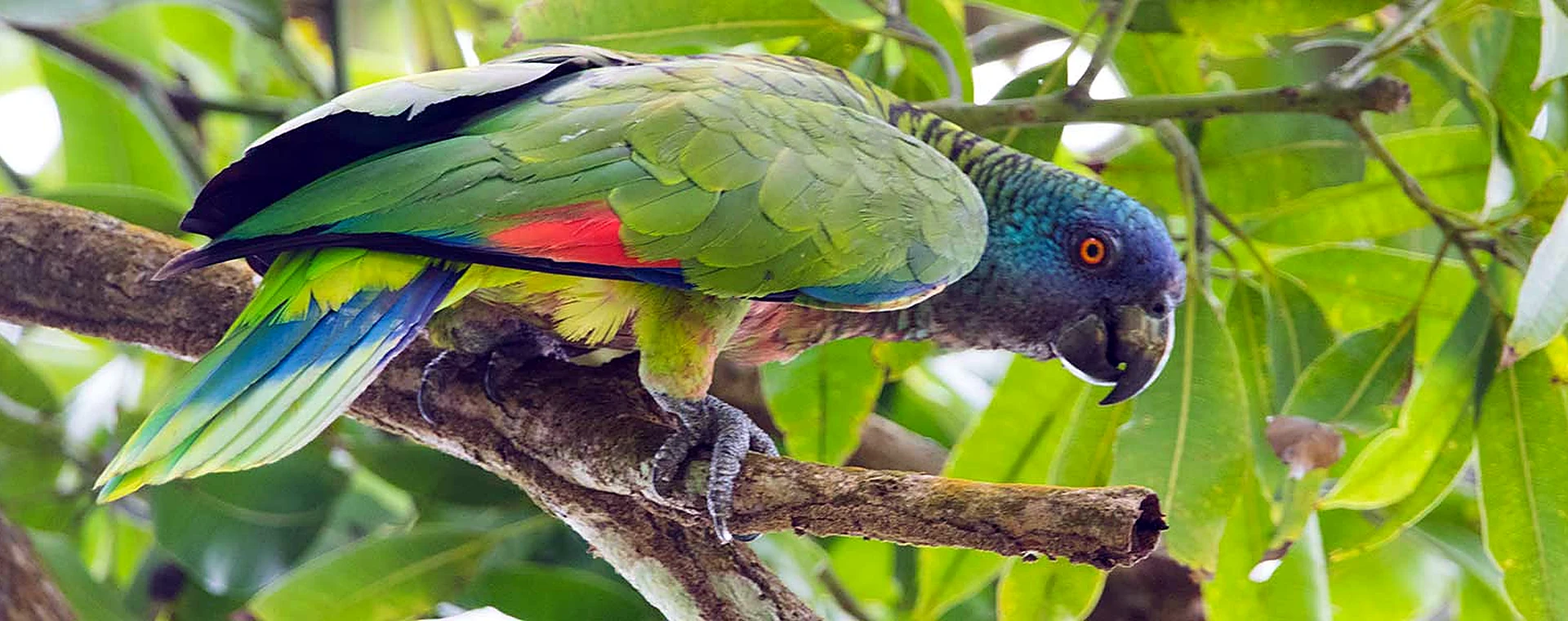
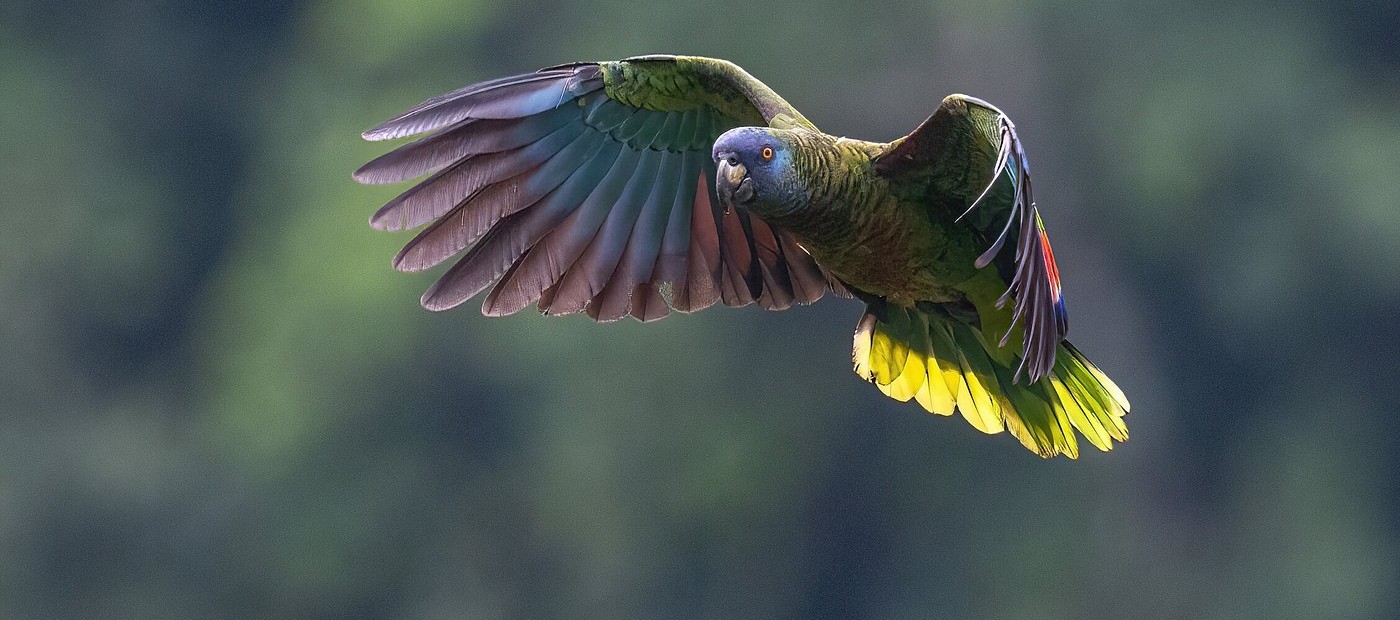
A loud call travels across the forest. A flash of green passes between the trees. Then, high in the canopy, the blue and violet head of the St. Lucia Parrot appears.
Known locally as the Jaquot, this large parrot exists naturally nowhere outside St. Lucia. Its mostly green plumage is enriched by a blue-to-violet head, a dark red breast and flashes of red, blue and yellow in the wings and tail.
The Jaquot is often heard before it is clearly seen. Pairs or small groups may call while moving between feeding, nesting and roosting areas. A guide's knowledge of the bird's calls, flight paths and preferred habitat can make the difference between a distant sound and a memorable encounter.
Habitat and range
Where You May Encounter It
The Jaquot is most closely associated with St. Lucia's forested interior, particularly mature montane rainforest. It may also forage in secondary forest and cultivated landscapes near suitable woodland. Large trees are essential because natural cavities provide nesting sites.
Responsible location information: The page identifies broad habitat and tour routes, but does not publish nest trees or other sensitive locations.
Plan an encounter
Tours Where You May See the St. Lucia Parrot
These experiences enter suitable habitat and are connected to the Jaquot through the existing tour descriptions. Sightings remain dependent on weather, timing and the natural movement of wild birds.
Primary target
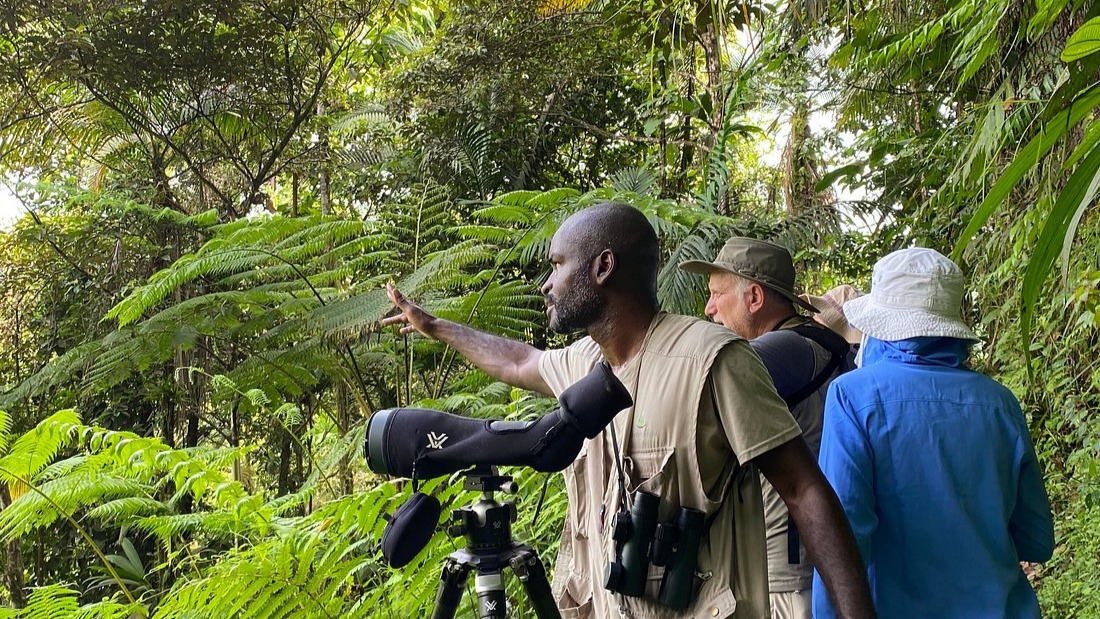
Hardcore Birding Expedition
A specialist full-day expedition through several habitats, including the Des Cartiers rainforest.
Strong possibility
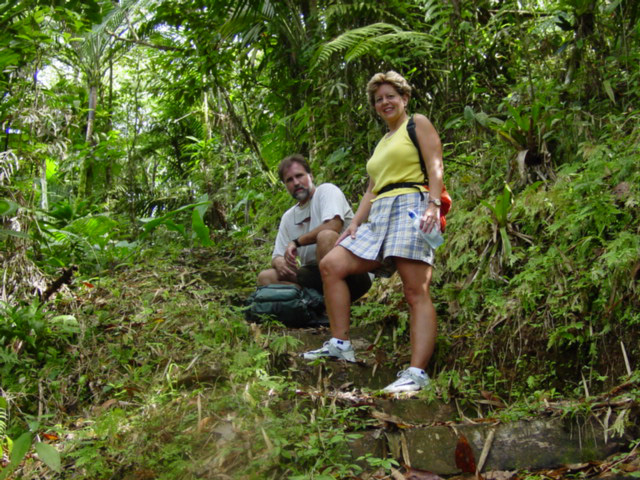
Des Cartiers Rainforest Trek
Explore one of St. Lucia's established parrot landscapes while learning about the forest around it.
Primary target
Small Six Safari
A signature conservation experience centred on three endemic birds and three endemic reptiles.
Route-dependent
Cruise Ship Special
A focused endemic-bird itinerary designed around realistic port-day timing and suitable habitat access.
Wildlife sightings are never guaranteed. Local guides select the strongest practical route using recent activity, weather and habitat conditions.
In the field
Field Observation
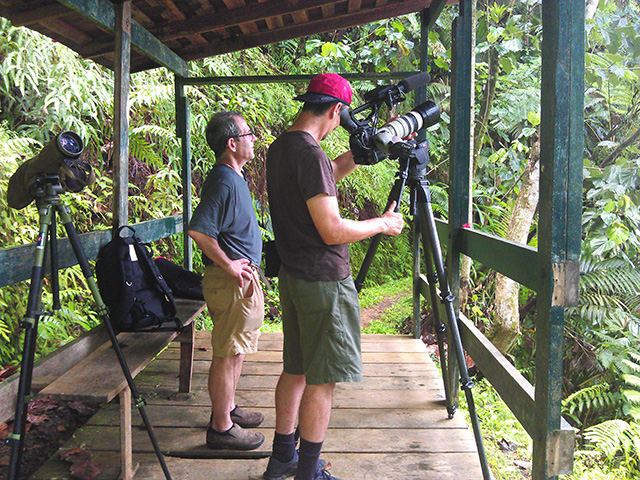
Hearing the Jaquot before seeing it is part of the experience. Its call may echo across the valley while the bird remains hidden high among the leaves. Patience and quiet observation usually work better than trying to follow every sound.
Images from the island
Gallery
A national recovery story
Conservation Matters
By the 1970s, hunting, habitat loss and illegal capture had pushed the St. Lucia Parrot dangerously close to extinction. Legal protection, public education and long-term conservation action helped the population recover substantially.
Its recovery is a success, not a reason for complacency. The entire global population still depends on the protection of one island's forests.
Main threats
Habitat loss, severe storms, nest disturbance and illegal capture.
What protects it
Forest conservation, wildlife law, education, monitoring and responsible tourism.
How visitors help
Use responsible guides, remain on suitable routes and never disturb nesting birds.
Why it matters
Protecting the Jaquot also protects forests, watersheds and many other island species.