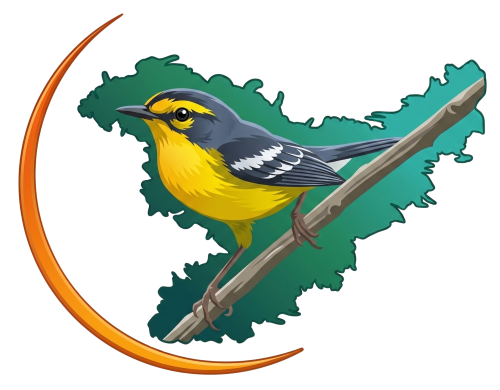
Scientific nameSetophaga delicata

Meet Our Wildlife Superstars
St. Lucia Warbler
Setophaga delicata
Kwéyòl/local name: Sucrier Ba bad
Bright yellow beneath a blue-grey back, the St. Lucia Warbler is one of the island’s most recognisable endemic birds. Known locally as Sucrier Ba bad, it is active, vocal and found across a wide range of wooded habitats.
EndemicFound only in St. Lucia
Least ConcernCurrent global status
Sucrier Ba badConfirmed local name
Widely DistributedUses many wooded habitats
Quick facts
At a Glance
FamilyParulidae
HabitatMost forest types, especially middle and upper forest
DietInsects, spiders and other small invertebrates
Field clueYellow face and underparts with blue-grey upperparts and two white wing bars
Global rangeEntirely restricted to St. Lucia
Meet the bird
About the St. Lucia Warbler
A small yellow bird moves quickly through the leaves, pauses for a moment and disappears again. The broad yellow eyebrow, yellow cheek and two white wing bars identify the St. Lucia Warbler.
Sucrier Ba bad has blue-grey upperparts and cap, with a bright yellow face, throat and underparts. It searches leaves and fine branches for insects and spiders, rarely remaining still for long.
The species occurs in many wooded habitats and is one of the more regularly encountered St. Lucian endemics. Its varied song, built from rich liquid notes and trills, is often the first clue that the bird is nearby.
Habitat and range
Where You May Encounter It
The St. Lucia Warbler occurs in most forest types and is especially associated with middle and upper forest. It can also be encountered in other wooded areas where there is enough foliage for feeding and nesting.
Responsible location information: The page may describe broad habitats, but should not identify active nests.
Plan an encounter
Tours Where You May See the St. Lucia Warbler
Sucrier Ba bad is one of the more widespread St. Lucian endemics, but its small size and constant movement can still make photography difficult. These tours enter suitable wooded habitat.

Strong possibility
Specialist & Endemic Birds Expedition / Cruise Ship Special
A focused endemic-bird route that can include suitable woodland within a cruise-friendly schedule.
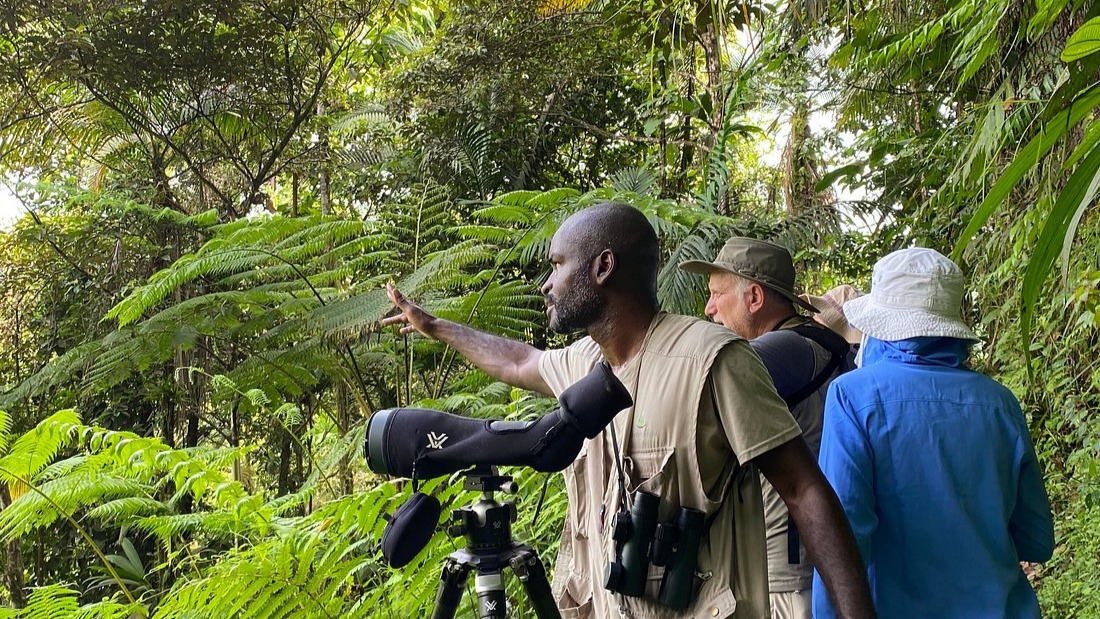
Strong possibility
Hardcore Birding Expedition
A full-day specialist route through several habitats, giving repeated opportunities to detect small endemic birds.
Wildlife sightings are never guaranteed. The guide may change the route according to weather, timing and current bird activity.
In the field
Field Observation
Watch the edges of leaves rather than the open branch. Sucrier Ba bad often reveals itself through movement first, then pauses just long enough for the yellow face and white wing bars to confirm the identification.
Images from the island
Gallery
A national recovery story
Conservation Matters
The St. Lucia Warbler is currently listed as Least Concern and remains one of the island’s more frequently encountered endemic birds.
Its secure status still depends on maintaining forest and other wooded habitat. Development, drought and climate change can affect feeding and nesting conditions, while Shiny Cowbirds and Carib Grackles may reduce nesting success.
Main pressures
Forest loss, drought, climate change, nest parasitism and nest predation.
What protects it
Connected wooded habitat, healthy forest edges and long-term population monitoring.
How visitors help
Keep a respectful distance, avoid nests and remain on suitable routes.
Why it matters
A common endemic is still globally irreplaceable because the entire species lives on one island.